





C2, TE, S1, S2: A Specifier's Plain-English Guide to Adhesive Classification Standards
Classification codes are compressed performance specifications — and reading them correctly prevents mismatches on site.
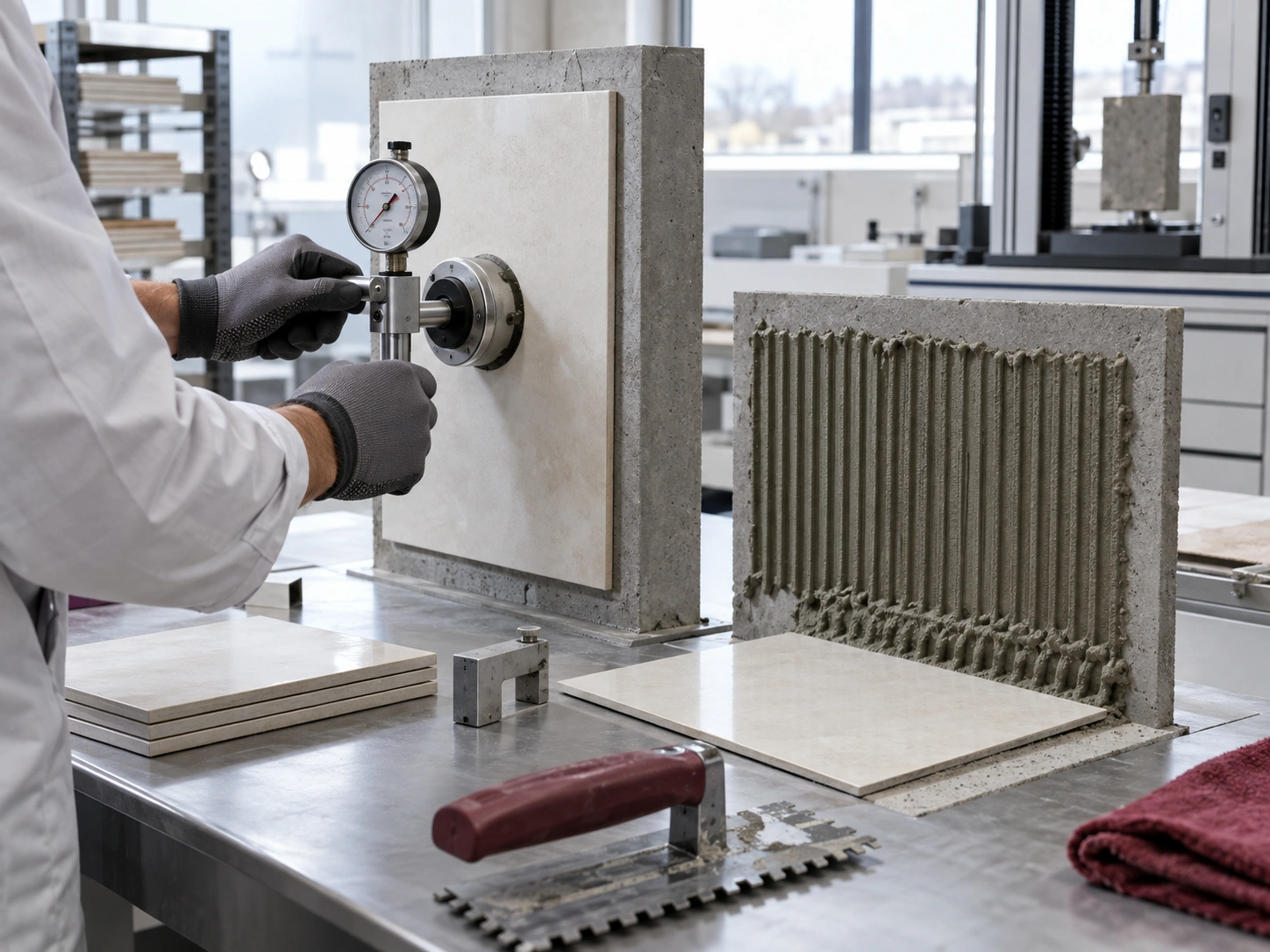
A tile adhesive bag or data sheet often carries a code like C2TE S1 — a string of letters and numbers that compresses a considerable amount of performance information into a shorthand most people outside a formulation lab have to look up every time they see it. For a specifier, understanding what those characters actually mean is the difference between checking a box on a document and confirming a product is genuinely fit for the project's conditions.
These classifications derive from the EN 12004 standard for cementitious, dispersion, and reaction resin adhesives for tiles, and similar classification logic appears in equivalent standards internationally, including ANSI A118 series classifications in the United States. While exact code letters differ between standards, the underlying performance categories they describe are broadly consistent.
Breaking down the code
The first letter — adhesive type. C means cementitious adhesive: cement-based and the most common type for standard applications. D means dispersion adhesive: ready-mixed and polymer-based. R means reaction resin adhesive: epoxy or similar, for chemical resistance or heavy-duty applications.
The number — performance class. 1 indicates a normal-set adhesive meeting base performance requirements. 2 indicates an improved adhesive, meeting enhanced bond strength and additional performance criteria beyond the base class.
The following letters — additional characteristics. F is fast-setting for accelerated schedules. T is reduced slip, important for wall applications and large-format tile where sag resistance matters. E is extended open time, giving applicators more working time before the adhesive skins over. S1 and S2 mean deformable and highly deformable, indicating the ability to flex without losing bond on substrates prone to movement.
So a C2TE S1 adhesive, decoded, is a cementitious adhesive meeting improved performance requirements, with reduced slip for vertical applications, extended open time, and deformable characteristics suited to substrates with some movement.
Why this matters more than it might appear to
It's tempting to treat classification codes as a compliance formality — confirm the code matches the specification, move on. In practice, the code is doing real work describing whether a product actually fits the project's specific conditions, and mismatches here are a genuine, recurring source of site failures.
Deformability class and substrate movement are directly linked. Specifying a standard, non-deformable adhesive on a substrate subject to thermal cycling, vibration, or structural movement — a rooftop terrace, heated floor, or timber substructure — removes a safety margin the project may actually need.
Slip resistance (T) matters disproportionately for large-format wall tile. As tile formats have trended larger, the T classification has become more relevant. A heavier tile without adequate slip resistance is a genuine installation risk on vertical surfaces, independent of the adhesive's bond strength figure.
Open time (E) interacts directly with crew scheduling and climate. A standard open-time adhesive on a large installation, in hot or dry conditions that accelerate skinning, can create application problems that have nothing to do with inherent adhesive quality and everything to do with a classification mismatch against real site conditions.
Using this in a specification
Rather than specifying a product by brand name alone, building the required classification directly into the specification — C2TE S1 or equivalent, for example — does two useful things: it defines the actual performance requirement independent of any single manufacturer, and it gives a reviewing specifier or contractor a fast, objective way to confirm whether a substitution genuinely meets the project's needs, rather than relying on brand reputation as a substitute for a stated performance requirement.
The takeaway
A classification code isn't bureaucratic shorthand — it's a compressed performance specification, and reading it correctly is a five-minute check that can surface a genuine substrate-compatibility issue before it becomes a site problem. For any project with unusual substrate conditions — movement, heat, large-format tile, or tight schedules — decoding the full classification, not just confirming the product exists on an approved list, is worth the five minutes.