





Inside 759,000+ Tests: What Rigorous Product Validation Actually Looks Like
A performance figure is only the visible summary of the many conditions tested behind it.
A technical data sheet reduces a formulation to a handful of figures: bond strength in N/mm², open time in minutes, slip resistance under a load. Those numbers look simple because they're meant to be usable at a glance — but each one represents a testing process that's considerably less simple than the final figure suggests, run and re-run across variables most specifiers never see documented.
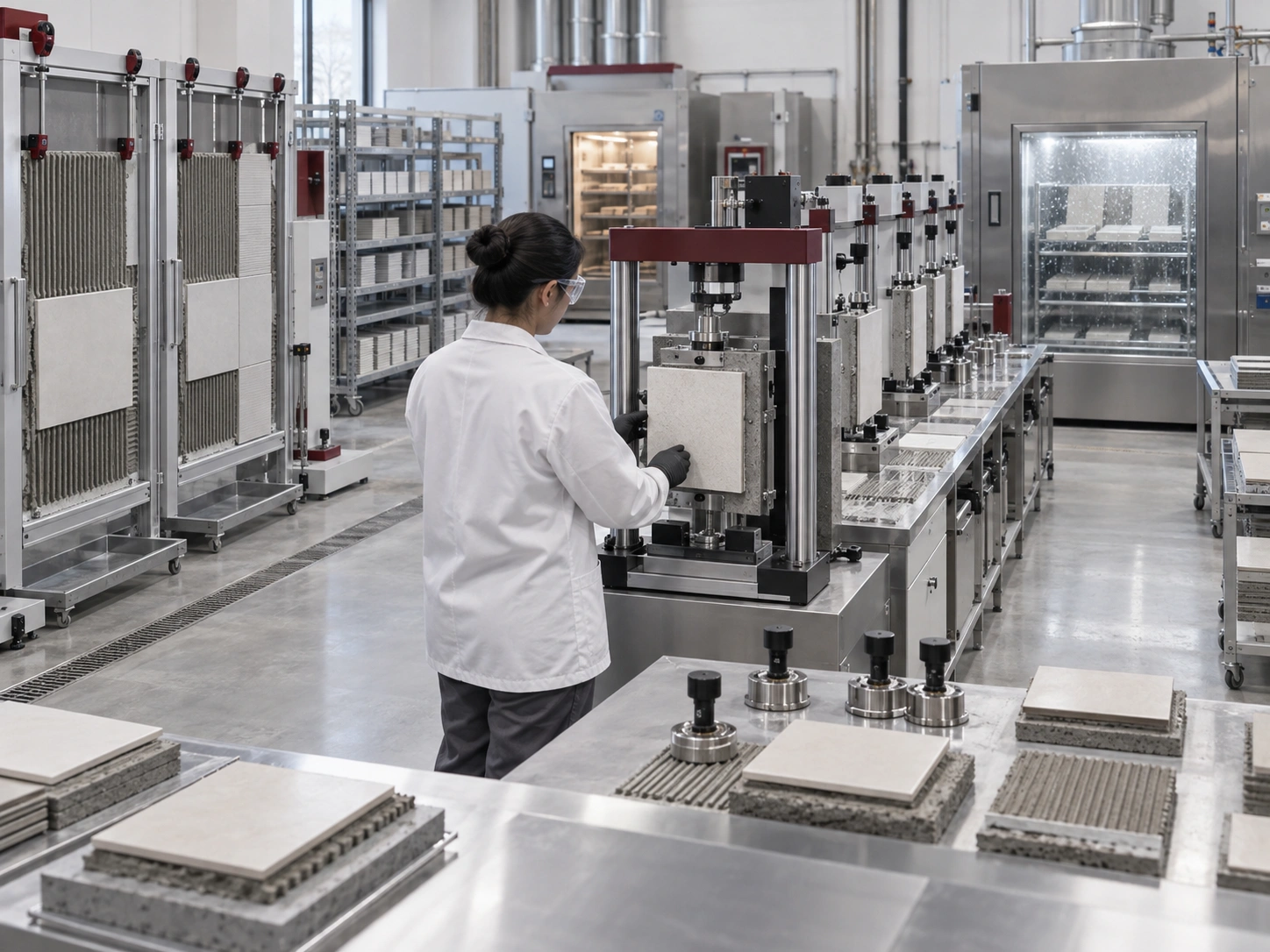
Bondure's testing volume — more than 759,000 tests to date — isn't a marketing statistic so much as a reflection of what genuine formulation validation actually requires, run across raw materials, environmental conditions, and application scenarios before a product reaches a site.
What sits behind a published figure
Take bond strength — arguably the single most scrutinized figure on any tile adhesive data sheet. A published number isn't the result of one test; it's a statistically defensible average, run across:
Multiple substrate types. Concrete, cement board, existing tile for overlay applications, and various masonry substrates all bond differently. A formulation validated only on one substrate type doesn't tell a specifier what will happen on another.
Multiple conditioning regimes. Standard cure, water immersion, heat aging, and freeze-thaw cycling where relevant to climate each subject the same formulation to different stress conditions. A product that performs well immediately after cure but degrades under prolonged moisture exposure has a real, practical limitation that a single dry-cure test wouldn't reveal.
Multiple raw material batches. Cement, polymers, and mineral fillers carry natural batch-to-batch variation from their own suppliers. Validating against that variation, rather than a single ideal batch, separates a lab result from a product that performs consistently at production scale, bag after bag, over years of manufacturing.
Real-world tile and substrate combinations. Beyond standardized lab substrates, formulations are tested against the range of tile formats, backs, and substrate conditions a product is likely to encounter on real projects — because a standardized test substrate and a genuinely difficult site substrate don't always behave the same way.
Why validation depth matters
Multiply this across the practical range of open time, workability, slip resistance, and durability testing a single formulation requires, and it becomes clear why a testing volume in the hundreds of thousands isn't excessive — it's closer to the baseline required to stand behind a performance claim with genuine confidence, rather than a single favorable result.
It's reasonable for a specifier to ask why testing rigor behind a data sheet figure should matter, when the published number is what appears on the specification either way. The answer is about what happens when site conditions inevitably diverge from the exact conditions of a single reference test.
A formulation validated across a wide range of substrates, conditioning regimes, and raw material variation is far more likely to perform consistently when a specific project's substrate, climate, or application method sits slightly outside the ideal test scenario — which describes the overwhelming majority of real projects. A formulation validated narrowly, against a single best-case scenario, carries more hidden risk of underperforming once real-world variables are introduced, even if its headline data sheet figure looks identical on paper.
In other words: two products can carry the same published bond strength figure and represent meaningfully different levels of confidence in how that figure was earned.
Validation continues after launch
Rigorous validation isn't a one-time gate before a product launches — it's an ongoing process. Raw material sourcing changes, and reformulation testing has to confirm that a supplier or batch change hasn't shifted performance. New tile formats and application methods emerge, and formulations get validated against them specifically rather than assumed to still apply. Field feedback from technical services and application training surfaces edge cases lab testing alone might not anticipate, which then feeds back into further validation.
This is also where Bondure's on-site testing capability connects back to the lab: live, side-by-side application testing on an actual project substrate is, in effect, an additional validation data point under real-world conditions — feeding practical insight back into the formulation and testing process, rather than testing existing purely as a pre-launch checkpoint.
The takeaway
A data sheet figure is a summary, not the full picture. When evaluating a product, asking what range of conditions a performance figure was validated against — rather than accepting the number at face value — is a reasonable, useful question, and one that a manufacturer with genuine testing depth should be able to answer specifically rather than generally.