





The Real Cost of Under-Ordering Tile Adhesive: A Specifier's Guide to Accurate Coverage Calculations
Accurate adhesive ordering starts with site conditions, not a single data-sheet coverage figure.
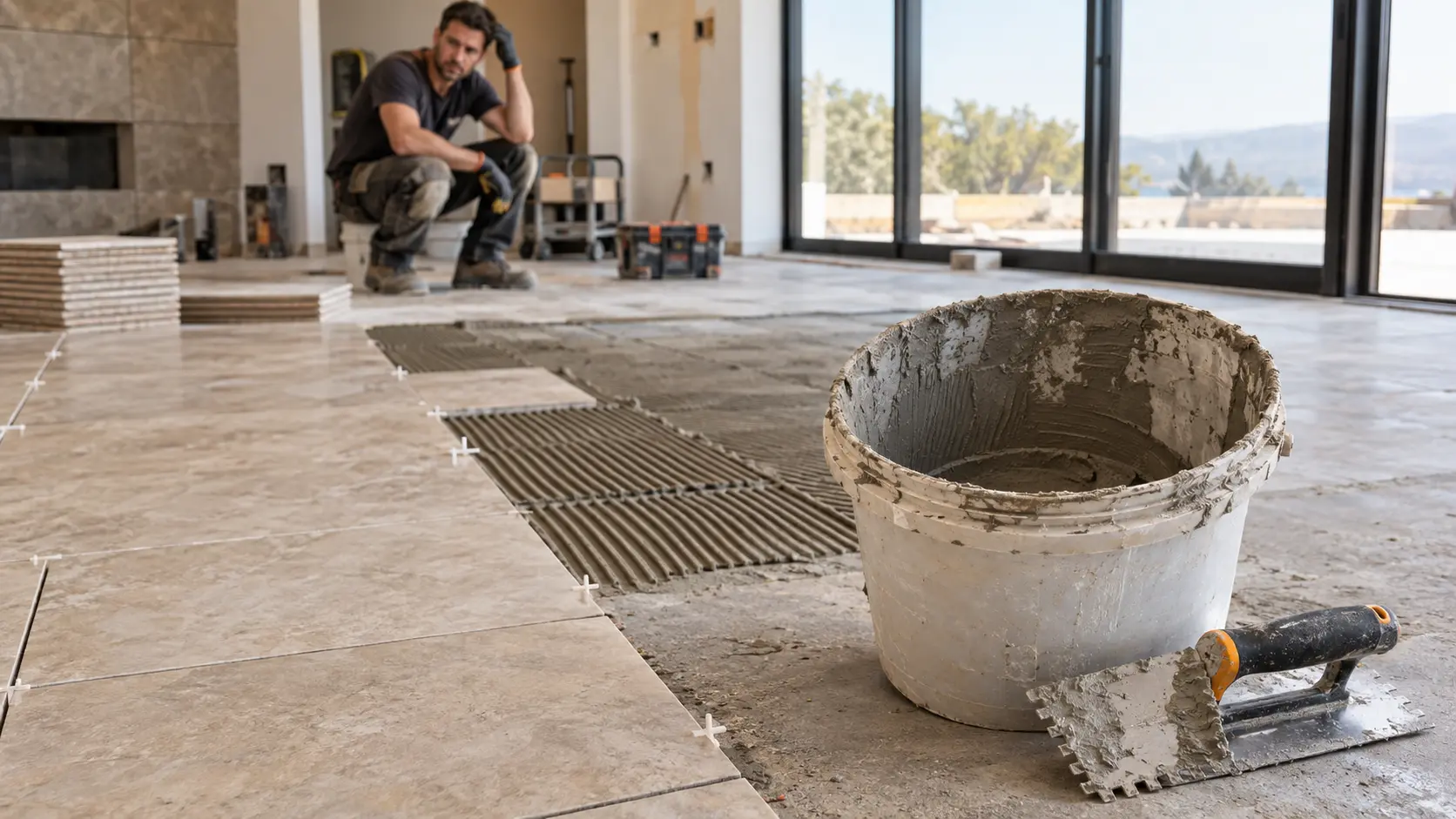
Every tile adhesive bag carries a coverage figure on the back. Multiply it by the area, add a contingency percentage, and you have a material order. In practice, that shortcut is where most site-level cost overruns quietly begin.
The published coverage rate on a technical data sheet is measured under controlled conditions — a specific trowel notch size, a flat and properly prepared substrate, a standard tile format, and an experienced applicator. Real substrates are rarely that cooperative. Uneven screeds, oversized or textured tile backs, and variable trowel technique across a crew can all push actual consumption well beyond the data sheet number, and by the time that gap shows up, it usually shows up as a stalled crew waiting on a second delivery.
Why the formula isn't the hard part
A coverage calculator is only as accurate as the assumptions fed into it. The arithmetic — area × consumption rate ÷ bag yield — takes seconds. Getting a number a site team can actually rely on means getting four inputs right before you touch the calculator at all.
Substrate flatness. Coverage rates assume a substrate within standard flatness tolerances. A screed that's out of level by even a few millimeters forces the applicator to build up thicker adhesive beds in low spots, which increases consumption in ways no calculator input captures unless you build in a flatness-based contingency.
Tile format and back texture. Large-format and heavily textured porcelain tiles need deeper, more generous trowel notches to achieve full contact and eliminate voids — particularly critical for exterior, wet-area, or high-traffic installations where lippage or hollow spots become failure points. A calculator built around standard-format tile assumptions will consistently underestimate large-format jobs.
Application method. Back-buttering, full-bed or thin-bed application, and trowel notch size — typically specified in millimeters — each change consumption meaningfully. A change from a 6mm to a 10mm notch can shift consumption by 30–40%.
Wastage and cut loss. Perimeter cuts, pattern layouts such as diagonal, herringbone, or running bond with offset, and breakage during handling all consume material that never reaches a wall or floor. Standard industry contingency sits between 5–10%, but complex layouts and irregular room geometries can justify more.
What a well-built calculator should ask for
A coverage tool that only asks for square footage is a rough guess wearing the costume of a calculation. A tool built for specifiers and site teams should prompt for:
Area to be tiled. Break this down by room or zone when the job spans different substrates.
Trowel notch size and shape. Match the notch to the specified tile format.
Substrate condition and flatness tolerance. Use the actual site condition, not an ideal assumption.
Tile size and back texture. These directly affect the required adhesive bed and coverage.
Layout pattern and expected cut wastage. Make contingency a deliberate input rather than an afterthought.
Bondure's Tile Adhesive Calculator is built around these variables specifically so that the output reflects site reality rather than a data-sheet best case. The goal isn't a smaller number or a bigger one — it's a number a project manager can order against without a follow-up call.
Ordering accuracy is a specification issue, not just a procurement one
It's tempting to treat material estimation as a contractor-side logistics problem, separate from the technical specification. In practice, the two are connected. A specification that names a product and application method but leaves coverage assumptions to guesswork transfers cost risk onto the contractor — and on a tight program, that risk often resurfaces as a request for substitution to a more economical product that may not meet the original performance intent.
Building coverage guidance into the specification package — expected consumption range by trowel size, substrate tolerance requirements, and a stated wastage allowance — closes that gap before it becomes a change order.
The practical takeaway
Coverage calculators are useful precisely because they force the inputs that actually govern consumption into the open before ordering happens, rather than after a crew runs short mid-installation. Treat the substrate condition, tile format, and application method as first-class inputs, not footnotes, and the number that comes out the other end will hold up on site — which is the only real test a calculator has to pass.